
Feel like your body is throwing curveballs at you that you didn’t sign up for? Hot flashes out of nowhere? Mood swings? Maybe you’re even wondering, “Is this normal, or is my body staging a silent protest?”
These could be symptoms of menopause or even perimenopause, and you are NOT alone. It’s about time we talk about it like real people, and we are going to help you understand this topic more. So, let’s dive in (Spoiler: there’s a lot you should know, but we’re keeping it bite-sized and real.)
What Is Perimenopause vs. Menopause?
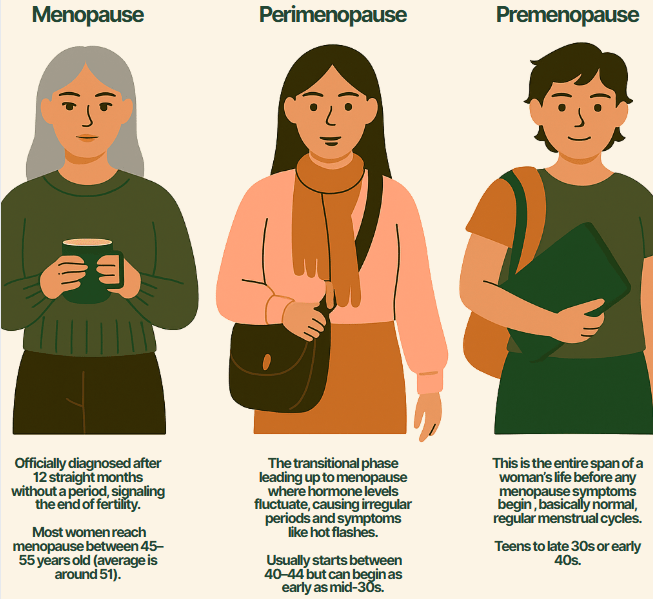
Think of perimenopause as = “Around menopause.” This is the hormonal rollercoaster before menopause actually kicks in. As an example, it is “the warning lights on the dashboard” phase. It can last anywhere from 4 to 10 years and come with A LOT of new changes to your body.
Menopause = Officially declared when you’ve gone 12 months in a row without a period. Did you know that the average age for menopause in the U.S. is 51, but perimenopause often starts in your 40s (and sometimes even your late 30s)? Yeah, we didn’t either, that is why we are writing this article!
Early Warning Signs of Perimenopause
The signs can feel a tad confusing, because most people classify these symptoms as things that just happen in your life in your 30s and 40s. But here is what’s actually not “random”:
- Irregular periods (shorter, longer, heavier, lighter…it’s a free-for-all)
- Hot flashes and night sweats
- Sleep disturbances
- Mood swings and feeling more anxious or depressed
- Brain fog and trouble concentrating
- Weight gain, especially around the belly
- Dry skin and thinning of hair
- Decreased libido (thanks, hormones)
- Vaginal dryness or discomfort/pain during sex
Bite-sized Knowledge Bomb: Hormones like estrogen and progesterone are the culprits behind these wild changes. Estrogen especially affects everything from your brain to your skin to your bones.
What Happens During Menopause Itself?
Once you’re officially in the menopause club, some of the perimenopause symptoms might “cool down” but others can persist or even intensify. Common experiences include:
- Bone loss (increasing your risk of osteoporosis)
- Heart health risks (estrogen helps protect your heart, so a decline can influence your heart health)
- Skin changes (hello, fine lines and wrinkles)
- Bladder control issues (it’s real, and it’s common)
- And for some, no periods, no PMS, no pregnancy worries
How to Know if You’re in Perimenopause or Menopause
Unfortunately, there is no magic test, BUT, you can perform blood tests to check hormone levels (like FSH, follicle-stimulating hormone). You can track your cycle to give you any major clues. Take time to speak with your doctor about any new symptoms you are experiencing, and if they do not listen….. FIND A NEW DOCTOR. You know your body the best at the end of the day, so trust your body.
Ways to Support Your Body
We want to just take a break and remind you… you are not powerless here! Whether you’re team “let’s do it natural” or “give me all the help I can get” there are many options.
Lifestyle Tweaks:
- Nutrition hacks: Increasing calcium intake, more vitamin D, more leafy greens.
- Exercise: Strength training, and incorporating daily movement
- Mindfulness and stress management: Meditation, therapy, breathing exercises.
- Herbal support: Black cohosh, evening primrose oil, and red clover may help (always talk to your doctor).
- Acupuncture: Some women swear it helps with hot flashes and mood swings.
Medical Support Options:
- Hormone Replacement Therapy (HRT): Pills, patches, creams, or gels that replace lost estrogen (sometimes combined with progesterone).
- Vaginal estrogen treatments: Creams, rings, or tablets specifically for vaginal dryness and discomfort.
- Non-hormonal medications: Options like SSRIs (low-dose antidepressants) can help manage hot flashes and mood swings.
- Bone health meds: Certain medications can help prevent osteoporosis if you’re at higher risk.
Pro tip: Starting conversations early with your doctor can make a massive difference.
Best Resources for Menopause and Perimenopause Support
Because sometimes Google just isn’t it.
- Menopause.org — the gold standard for research-based info, easy to digest, myth-busting, and science-backed.
- Balance-Menopause.com — app + website, created by a menopause specialist.
- Let’s talk Menopause – national nonprofit invested in changing the conversation around menopause
- Menopause Preparedness Toolkit: A Woman’s Empowerment Guide
- Womenshealth.gov – Menopause – OWH coordinates women’s health efforts across HHS and addresses critical women’s health issues by informing and advancing policies, educating health care professionals and consumers, and supporting innovative programs.
Hot Tip: Advocate for Yourself
Doctors sometimes dismiss perimenopause symptoms (especially if you’re under 45). If you feel “off” and someone tells you it’s “just stress”…. trust yourself. Ask for hormone panels. Find a provider who listens. Menopause is natural, but suffering in silence isn’t.
Want to stay informed on the latest in healthcare? Subscribe to the UpNEXHeath blog and get notified when new articles are published!
FAQs –
How long does perimenopause last?
It varies! Anywhere from 4 to 10 years before full menopause.
Can you still get pregnant during perimenopause?
Yes, until you hit full menopause (12 months without a period), you’re technically still fertile (even if odds are lower).
Are there medical treatments for menopause symptoms?
Yes! Options include hormone replacement therapy (HRT), vaginal estrogen products, low-dose antidepressants, and bone-health meds. Always talk to a healthcare provider.
Does everyone get hot flashes?
Nope! Around 75% of women do, but some never experience them. Everyone’s menopause journey is unique.
When should I talk to a doctor?
If symptoms interfere with your life, your mental health struggles, or you just want to get ahead of it — definitely check in


 UPNEX HEALTH