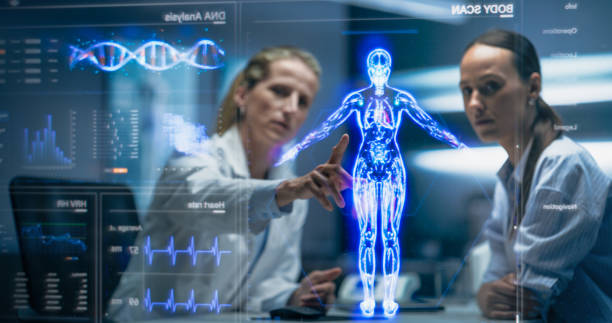
A New Frontier for Personalized Healthcare
Digital Twin Technology—once a concept reserved for industrial applications—is rapidly emerging in healthcare as a powerful tool for personalized patient care.
By creating virtual replicas of patients using real-time data, healthcare providers are now able to develop individualized treatment plans, continuously monitor patient health, and predict disease progression with unprecedented accuracy. Recent pilot studies and early-stage clinical trials launched in early March 2025 demonstrate the potential of digital twins to transform how we approach medical care.
What Are Digital Twins?
A digital twin is a dynamic, virtual model of a physical entity (in this case, a patient) that is continuously updated with real-time data from various sources such as:
- Electronic health records
- Wearable devices
- Imaging systems
- Genetic information
Unlike traditional static digital models, digital twins facilitate a two-way data exchange between virtual and physical environments, enabling simulations and analyses that can enhance clinical decision-making.
Personalized Treatment Planning
Digital twins provide a platform to tailor treatments to individual patient characteristics. By integrating diverse data streams, these virtual replicas can simulate a patient’s response to different therapeutic interventions before the treatment is administered.
For example, clinicians can test various drug regimens in silico to predict efficacy and avoid adverse reactions, thereby reducing the trial-and-error aspect of treatment planning. This personalized approach not only improves outcomes but also helps optimize resource allocation in clinical settings.
Real-Time Monitoring
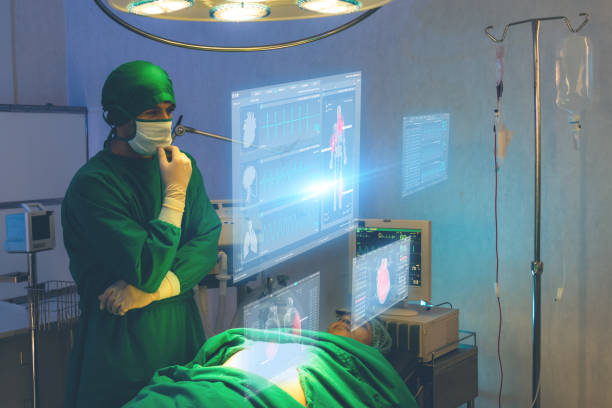
The continuous synchronization of digital twins with live patient data enables real-time monitoring of vital signs and physiological parameters. This capability is especially valuable for managing chronic conditions, where early detection of deterioration can prompt timely interventions. Real-time monitoring via digital twins offers clinicians an up-to-date view of a patient’s health status, facilitating adjustments to treatment plans on the fly and potentially reducing hospital readmissions.
Predictive Modeling of Disease Progression
Digital twins use advanced data analysis and machine learning to model how diseases progress over time. By looking at both past and present patient information, these models can predict possible complications and the outcomes of treatments. Predictive modeling helps provide care earlier, allowing healthcare providers to take action before a patient’s condition gets worse. This method is showing promise in initial studies and clinical trials, where early findings suggest that predictions made using digital twins can improve diagnosis accuracy and guide preventive measures.
Recent Developments and Clinical Trials
Early March 2025 has seen the launch of several pilot studies and clinical trials focused on integrating digital twins into patient care. These studies are examining the technology’s ability to:
- Personalize treatment regimens by simulating patient-specific responses to therapy.
- Monitor patients remotely through continuous data feeds from wearable sensors and medical devices.
- Predict disease trajectories using advanced computational models that integrate multi-source data.
These initiatives aim to validate the clinical utility of digital twins, ensuring they meet stringent regulatory and safety standards while providing actionable insights that enhance patient care.
Learn more about who’s integrating digital twin technology here:
- Unlearn:
A digital twin company that uses advanced simulation technology to generate virtual control arms in clinical trials. - Twin Health:
Focusing on metabolic care, Twin Health utilizes AI-powered digital twins to monitor patients’ metabolic conditions. - TWIN-GPT Study:
A recent study titled TWIN-GPT: Digital Twins for Clinical Trials via Large Language Model proposes an innovative approach that leverages large language models to create personalized digital twins for individual patients. - Digital Twins for Clinical and Operational Decision-Making (JMIR Scoping Review):
A comprehensive scoping review published in the Journal of Medical Internet Research examines various digital twin applications in healthcare. The review highlights how digital twins can predict disease trajectories, personalize care, and optimize clinical operations, validating their clinical utility under stringent regulatory standards.
Want to stay informed on the latest in healthcare? Subscribe to the UpNEXHeath blog and get notified when new articles are published!
FAQs –
What exactly is a digital twin in healthcare?
A digital twin is a virtual replica of a patient that is continuously updated with real-time data. It enables simulation of treatment responses, monitoring of health parameters, and prediction of disease progression.
How do digital twins improve personalized treatment planning?
By integrating data from sources like EHRs, wearables, and imaging systems, digital twins allow clinicians to simulate how different treatments might work for a specific patient. This helps in selecting the most effective therapy with reduced risk of adverse reactions.
In what ways are digital twins used for real-time monitoring?
Digital twins are linked with continuous data streams from wearable devices and medical sensors. They provide up-to-date information on a patient’s vital signs and health metrics, which can prompt timely medical interventions when abnormalities are detected.
What role does predictive modeling play in digital twin technology?
Predictive modeling uses historical and current patient data to forecast disease progression and potential complications. This allows healthcare providers to intervene early, often before clinical symptoms worsen.
Are there any recent clinical trials involving digital twins?
Yes, recent pilot studies and early-stage clinical trials launched in early March 2025 are evaluating the application of digital twins in patient care. These studies focus on personalized treatment planning, real-time monitoring, and predictive analytics to improve overall patient outcomes.


 UPNEX HEALTH