Imagine a map so detailed that it doesn’t just show roads, it shows every tiny path, every house, and every wire behind the walls. Now imagine that map isn’t of a city… but of a brain.
Welcome to one of the most exciting scientific breakthroughs of 2025: The Mouse Brain Connectome Project.
What Is the Mouse Brain Map, and Why Does It Matter?
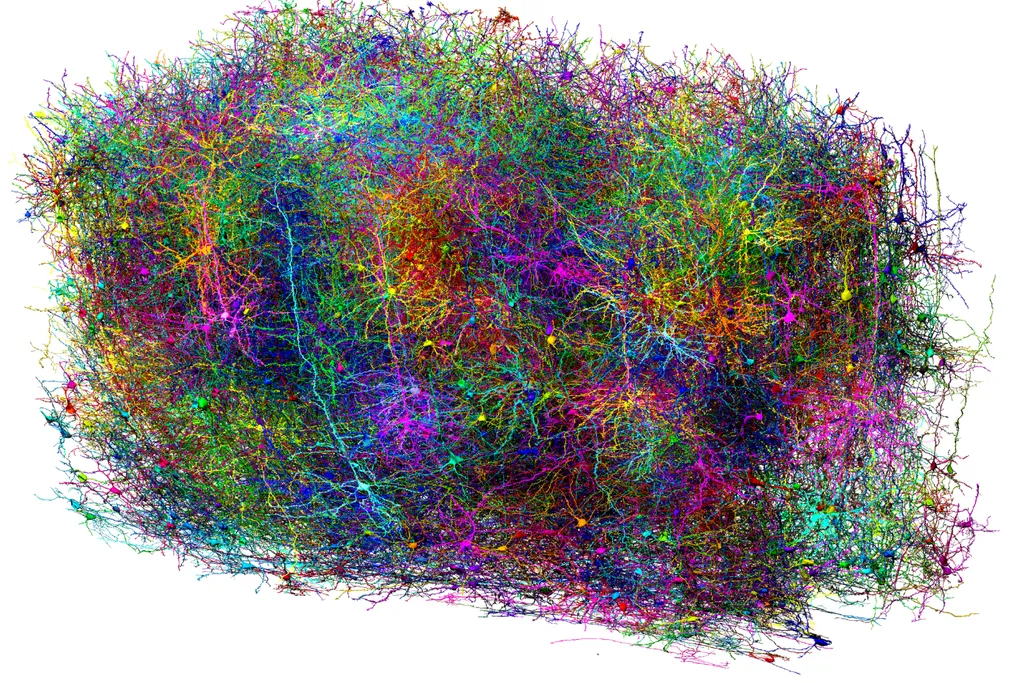
Scientists recently unveiled the first 3D, high-resolution map of a mammalian brain (specifically, a mouse’s visual cortex) and the results are mind-blowing.
In a speck of brain no bigger than a grain of sand, researchers mapped:
- 84,000 neurons (brain cells that send messages)
- 500 million synapses (connection points between neurons)
- 5.4 kilometers (3.4 miles) of wiring
Yep, all that inside one tiny cube of brain tissue!
This effort took over 150 scientists, 22 institutions, nearly a decade, and 1.6 petabytes of data…..that’s about 22 years of nonstop HD video worth of information.
Why it matters: This brain map gives us a never-before-seen look at how brain cells actually connect and communicate, unlocking new ways to understand (and maybe even treat) conditions like Alzheimer’s, autism, Parkinson’s, and schizophrenia.

The Hidden Forest Inside Your Head
Picture this:
Inside that mouse’s brain lies an intricate forest of pathways, like an ultra-complex Google Maps of thoughts, senses, and memories.
Researchers call this detailed structure a connectome (basically a wiring diagram of the brain.)
Dr. Clay Reid of the Allen Institute described it perfectly:
“Inside this tiny speck is an exquisite forest of connections, filled with rules we’re only beginning to understand.”
By mapping this “forest”, scientists can now trace exactly how messages travel, how neurons interact, and how signals might go wrong in diseases.
Fun Fact: What Movies Helped Map the Brain?
Here’s a plot twist you didn’t see coming: To stimulate the mouse’s brain for the study, researchers showed it short clips from The Matrix, Mad Max: Fury Road, and extreme sports YouTube videos. (Yes, the mouse basically had its own action movie marathon.)
By watching how different neurons fired while the mouse processed these scenes, scientists linked brain structure to brain function. (Marking the first time scientists have mapped both what a brain is wired like and how it behaves at the same time!)
Why This Map Changes Everything
In 1979, Nobel Prize winner Francis Crick said mapping even a cubic millimeter of brain tissue was impossible.
Fast forward to today, not only have scientists done it, but they’ve also created a dynamic blueprint we can actually explore digitally.
This opens up brand-new possibilities, like:
- Understanding mental health disorders at the circuit level
- Developing smarter treatments for neurological conditions
- Advancing AI by mimicking the brain’s complex wiring
- Studying how memories, thoughts, and emotions are built
All from just one tiny cube of brain.
Will Scientists Map the Human Brain Next?
Short answer: Not yet.
The human brain is about 1,500 times larger than a mouse’s brain, making it a colossal challenge.
But researchers are hopeful in the future. The techniques refined during this mouse brain project could one day allow us to trace larger sections of the human brain, giving us even deeper insight into how we think, feel, and heal.
Want to stay informed on the latest in healthcare? Subscribe to the UpNEXHeath blog and get notified when new articles are published!
FAQs –
What is a brain connectome?
A connectome is like a wiring diagram of the brain. It shows how every neuron connects to others through tiny links called synapses.
Why did researchers choose a mouse brain?
Mouse brains are strikingly similar to human brains in many ways, especially when it comes to basic structures and functions. Studying mice helps us safely explore human-like brain systems.
How long did it take to create the brain map?
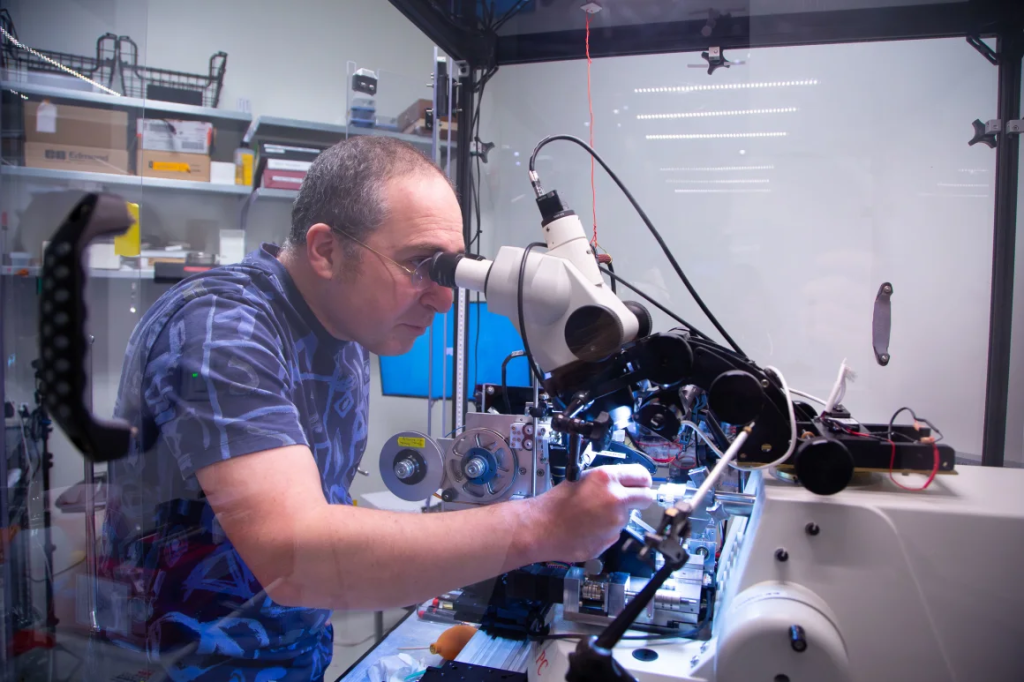
The project took nearly 10 years and involved slicing the brain tissue into 28,000 slices, photographing each slice, and reconstructing them using AI and machine learning.
How could this research help people?
Mapping the brain could lead to better treatments for diseases like Alzheimer’s, autism, and Parkinson’s, and even help scientists build more human-like AI in the future.


 UPNEX HEALTH