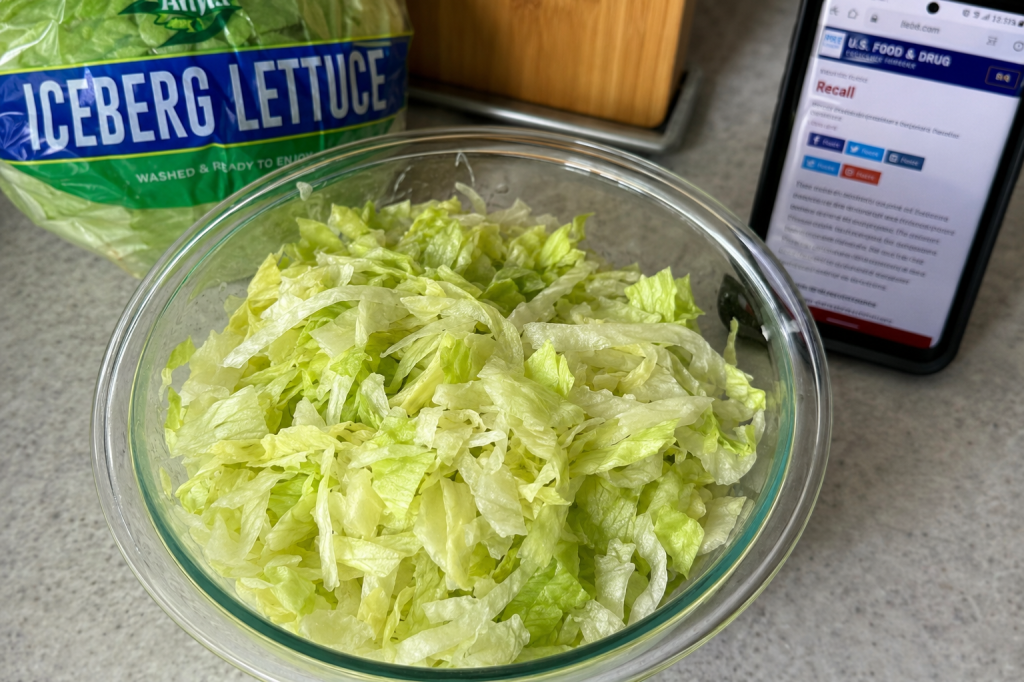
A multistate Cyclospora outbreak linked to iceberg lettuce has become one of the biggest public health stories in the U.S. right now.
CDC, FDA, and state public health officials are investigating a cluster of Cyclospora infections linked to shredded iceberg lettuce connected to illnesses in five states. As of the latest CDC update, the outbreak includes more than 1,644 cases, 94 hospitalizations, and no reported deaths. The affected states include Indiana, Kentucky, Michigan, Ohio, and West Virginia.
On July 17, 2026, Taylor Farms de Mexico recalled all iceberg lettuce sourced from central Mexico, including lettuce distributed to restaurants, retailers, and food service customers. CDC is warning people not to eat recalled iceberg lettuce and to ask restaurants about the source of iceberg lettuce if they are unsure.
There is also a complicated update: FDA initially reported a positive Cyclospora test result from a lettuce sample, but later said the result was a false positive after a re-review. Even with that correction, FDA says its traceback investigation still points to iceberg lettuce from Taylor Farms de Mexico as the likely source of the outbreak.
So what exactly is Cyclospora, why is lettuce often involved in outbreaks like this, and what should consumers do now?
Let’s dive into the facts.
What Is Cyclospora?
Cyclospora is a microscopic parasite that can cause an intestinal illness called cyclosporiasis. People usually get sick after eating food or drinking water contaminated with the parasite.
Unlike some foodborne illnesses that come from bacteria like Salmonella or E. coli, Cyclospora is a parasite. That makes it harder to detect, harder to trace, and sometimes harder for patients to recognize because symptoms may not start right away.
CDC says symptoms usually begin about one week after infection, but can start anywhere from 2 days to 2 weeks or more after exposure. Without treatment, symptoms can last from a few days to a month or longer.
The primary symptoms include:
- Watery diarrhea
- Fatigue
- Loss of appetite
- Stomach cramps
- Nausea
- Bloating
- Increased gas
- Low-grade fever in some cases
For many people, the most noticeable symptom is persistent watery diarrhea that does not feel like a typical short stomach bug.
What Is Happening With the Current Outbreak?
The FDA says illnesses began between May 13 and July 13, 2026, and that the outbreak was linked to people who reported eating at Taco Bell locations in Indiana, Kentucky, Michigan, Ohio, and West Virginia. The FDA also said that Michigan health officials reviewed food exposure information from 190 cases, and ingredient-level analysis found that 90% of those interviewed reported eating iceberg lettuce.
This does not mean every Taco Bell location or every lettuce product in the country is linked to the outbreak. The investigation is focused on recalled iceberg lettuce sourced from central Mexico and distributed by Taylor Farms de Mexico.
Taco Bell has indicated it is no longer using lettuce from Taylor Farms de Mexico as of July 17, 2026. FDA says additional states may be added to the advisory as more information becomes available.
Why Iceberg Lettuce?
Leafy greens are often involved in foodborne illness investigations because they are usually eaten raw. That means there is no cooking step to kill bacteria or parasites before the food reaches consumers.
Cyclospora is commonly linked to produce that may have been contaminated through water used during growing, harvesting, washing, or processing. AP reported that the parasite can spread when produce comes into contact with contaminated water, including during irrigation or washing.
That is why public health investigations look at more than the restaurant where someone ate. They trace the ingredient backward through the supply chain: restaurant, distributor, processor, farm, region, and sometimes water sources.
In this outbreak, FDA says its traceback investigation identified convergence on a single supplier, Taylor Farms de Mexico, that provided shredded iceberg lettuce used at Taco Bell locations where sick people ate before becoming ill.
What About the False Positive Test?
This is where the story gets more complicated.
On July 19, the FDA announced that it re-examined a lettuce sample that was earlier reported positive for Cyclospora. The FDA determined that this finding was not a genuine increase in the bacteria and should be seen as a false positive. As of July 19, the FDA stated there were no confirmed positive test results for Cyclospora in any products.
That may sound like the outbreak link disappeared, but FDA says it has not.
Foodborne outbreak investigations do not depend only on one lab result. Investigators also use epidemiologic data, food histories, ingredient analysis, illness timing, supply-chain traceback, and geographic patterns.
AP reported that federal officials said they remain focused on lettuce from Taylor Farms as the source despite the faulty test result. FDA officials also said Cyclospora is difficult to detect in food, and investigators often rely on patterns from what people ate, where they ate, and when they became ill.
In plain language: the lab correction matters, but it does not erase the broader investigation.
What Should Consumers Do Now?
CDC and FDA are advising people not to eat recalled iceberg lettuce from Taylor Farms de Mexico. If you bought recalled lettuce, throw it away or return it to the store. If you are eating at a restaurant and do not know the source of the iceberg lettuce, ask.
CDC also advises washing items and surfaces that may have touched recalled lettuce using hot soapy water or a dishwasher. FDA recommends cleaning and sanitizing any surfaces or containers that came into contact with recalled product.
This is especially important because foodborne illness prevention is not only about avoiding the product itself. Cross-contamination can happen when contaminated food touches cutting boards, containers, refrigerator drawers, knives, counters, or other foods.

When Should You Contact a Healthcare Provider?
Contact a healthcare provider if you develop symptoms of cyclosporiasis, especially if you ate shredded iceberg lettuce in the two weeks before getting sick. FDA specifically advises people with symptoms to report them and receive care, particularly if they had recent exposure to the implicated lettuce.
CDC notes that people may need to specifically request testing for Cyclospora because routine stool tests do not always screen for this parasite.
That detail matters. If someone has ongoing watery diarrhea and only gets a routine stool test, Cyclospora may be missed unless the provider orders the right test.
Why This Outbreak Matters
This outbreak is about more than lettuce.
It shows how complicated food safety can be in a modern supply chain. A single ingredient can move through farms, processors, distributors, restaurants, retailers, and multiple states before anyone realizes people are getting sick.
It also shows why public health messaging has to be precise.
On one hand, consumers need clear instructions: do not eat recalled lettuce, clean surfaces, and seek care if symptoms develop.
On the other hand, outbreak investigations can change as new evidence comes in. The FDA’s false positive correction is a reminder that science is a process, especially when testing for a parasite that is difficult to detect in food.
That can feel confusing to the public, but it is also part of how outbreak response works. Investigators update guidance as they gather better data.
The Bottom Line
The current Cyclospora outbreak is active, large, and still being investigated.
Food safety stories can feel confusing when details change, but the public health message is still clear:
Do not eat recalled lettuce.
Pay attention to symptoms.
Ask about lettuce sources when eating out.
Seek care if symptoms persist.
This is how outbreak response works in real time: imperfect, evolving, but focused on preventing more people from getting sick.
Want to stay informed on the latest in healthcare? Subscribe to the UpNEXHeath blog and get notified when new articles are published!
FAQs –
What is Cyclospora?
Cyclospora is a microscopic parasite that can cause an intestinal infection called cyclosporiasis. It is usually spread through contaminated food or water.
What food is linked to the current outbreak?
CDC and FDA are investigating an outbreak linked to recalled iceberg lettuce from Taylor Farms de Mexico, including shredded iceberg lettuce served at some Taco Bell locations in Indiana, Kentucky, Michigan, Ohio, and West Virginia.
How many people have gotten sick?
CDC reports more than 1,644 cases, 94 hospitalizations, and no deaths in the five-state outbreak as of the latest update.
What are the symptoms of cyclosporiasis?
Symptoms can include watery diarrhea, fatigue, loss of appetite, stomach cramps, nausea, bloating, gas, and sometimes fever.
Is the outbreak only connected to Taco Bell?
The current investigation includes cases linked to Taco Bell locations in five states, but the recalled lettuce was distributed to restaurants, retailers, and food service customers. CDC also says it is investigating other Cyclospora illnesses nationally that may be unrelated.
How long does it take symptoms to appear?
Symptoms usually begin about one week after infection, but they can start anywhere from 2 days to 2 weeks or more after exposure.
Sources and References
Centers for Disease Control and Prevention. “Cyclospora Outbreak Linked to Iceberg Lettuce in 5 States.” CDC, 17 July 2026, https://www.cdc.gov/cyclosporiasis/outbreaks/07-26/index.html.
Centers for Disease Control and Prevention. “Investigation Update: Cyclospora Outbreak, July 2026.” CDC, 17 July 2026, https://www.cdc.gov/cyclosporiasis/outbreaks/07-26/investigation.html.
U.S. Food and Drug Administration. “Investigation of 5-State Outbreak of Cyclospora Illnesses: Iceberg Lettuce.” FDA, updated 20 July 2026, https://www.fda.gov/food/outbreaks-foodborne-illness/investigation-5-state-outbreak-cyclospora-illnesses-iceberg-lettuce-july-2026.
Perrone, Matthew. “FDA Still Focused on Lettuce Supplier as Source of Parasite, Despite Faulty Test Result.” Associated Press, 20 July 2026, https://apnews.com/article/cyclospora-lettuce-taco-bell-cdc-fda-77f2b6db56fbeddcae045a03ccf122c4.


 UPNEX HEALTH
Leave a comment