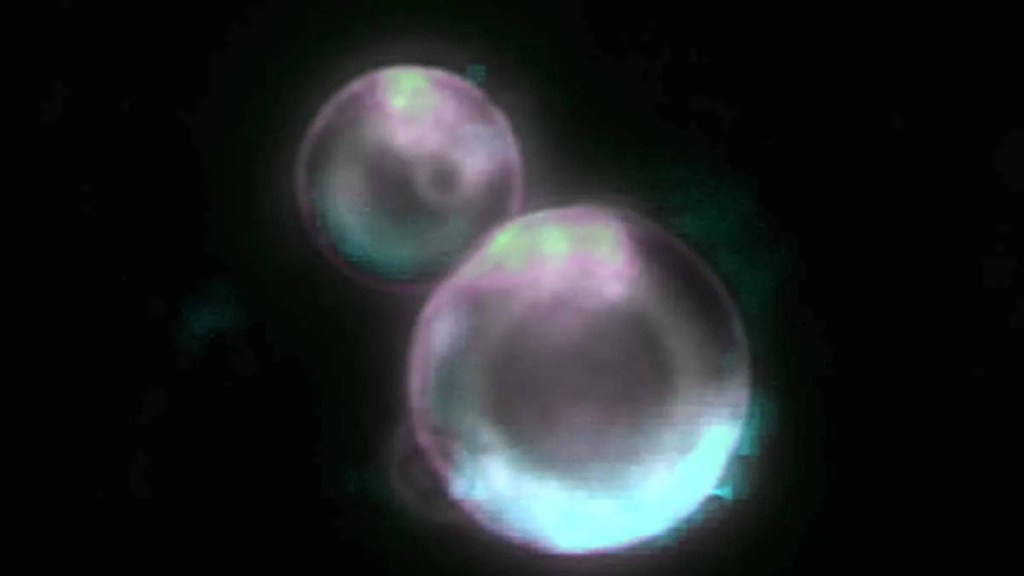
Scientists at the University of Minnesota have reported a major step forward in synthetic biology: a lab-made cell-like system called SpudCell that can feed, grow, copy its DNA, divide, and show signs of selection across generations.
That sounds like science fiction, but the important detail is this: researchers are not claiming they created full life. SpudCell is not a natural cell, not a medical treatment, and not something ready for use in patients. It is an early research breakthrough that may help scientists better understand what life actually needs to function. The work has been released as a preprint, meaning it has not yet gone through full peer review.
Still, the achievement is getting attention because it brings researchers closer to one of biology’s biggest questions: can life-like behavior be built from non-living parts?
Let’s break down what SpudCell is, how it works, and why this matters for the future of healthcare.
What Is SpudCell?
SpudCell is a synthetic cell-like system built from known chemical components. Unlike earlier synthetic biology projects that modified existing living cells, SpudCell was built from the bottom up using non-living materials. The University of Minnesota describes it as the world’s first synthetic cell with a complete life cycle.
At a simple level, think of SpudCell as a tiny bubble with instructions inside.
That bubble is made from lipids, the same type of fatty molecules that help form natural cell membranes. Inside are genetic instructions and molecular tools that allow the system to perform basic cell-like behaviors. According to Biotic, the system includes a 90,000 base pair genome, purified enzymes, and a lipid membrane. It can grow, replicate its genome, divide, and undergo selection and competition across multiple generations.
That is why scientists are paying attention. A lot of lab systems can copy one feature of life. SpudCell combines several of the most important features into one synthetic system.
How Does SpudCell Work?
Natural cells are incredibly complex. They make energy, repair damage, copy DNA, divide, communicate, and adapt. SpudCell does not do all of that. But it does recreate several core steps of a cell cycle.
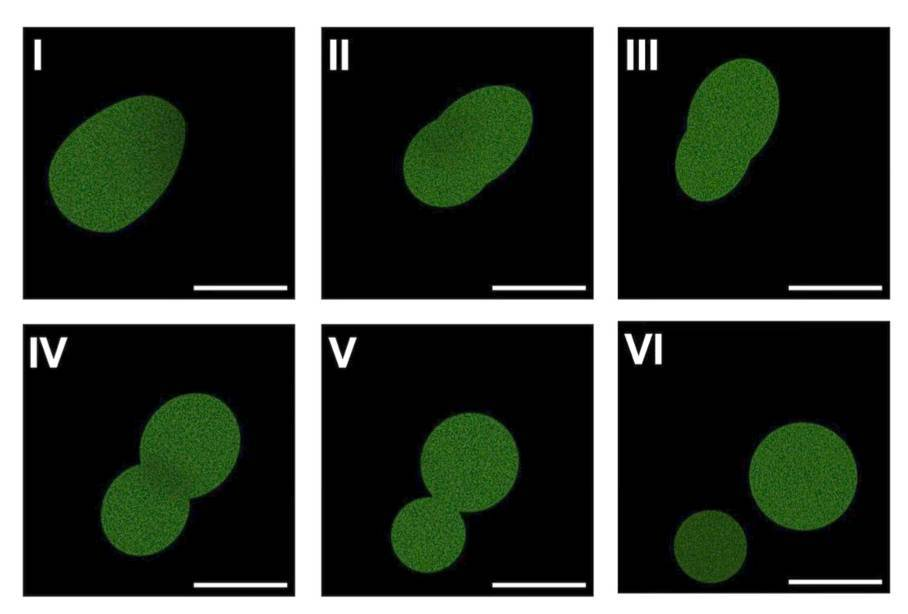
SpudCell grows by fusing with smaller “feeder liposomes,” which are tiny lipid bubbles that deliver materials like lipids, enzymes, ribosomes, and small molecules. In other words, SpudCell does not make everything it needs from scratch. It still depends on outside supplies.
The division process is also different from how many natural cells divide. Natural cells often rely on an internal structure called the cytoskeleton to help split during division. SpudCell sidesteps that process. Instead, proteins gather on the membrane surface until mechanical stress causes the membrane to split.
Researchers also tested whether certain versions of SpudCell could outcompete others. When they introduced a genetic change that helped some cells grow faster and produce more offspring, those faster-growing cells became more common after several generations. That suggests a basic form of selection in a fully synthetic chemical system.
Is This Actually Life?
Not yet.
That is the part that can get lost in the headlines.
SpudCell behaves like a cell in important ways, but it is not fully alive in the way bacteria, yeast, or human cells are alive. It cannot sustain itself independently. It relies on outside materials, including supplied ribosomes, which are the molecular machines cells use to make proteins. Quanta reported that the cell is not alive by any definition because it still needs constant deliveries of food and ribosomes, and lacks important systems like strong waste removal and self-maintenance.
Biotic also lists several major next steps, including building ribosomes from genetic instructions, improving genome distribution during division, and reducing dependence on external feeding. SpudCell currently runs for a limited number of generations before the machinery degrades.
So the best way to think about this is not “scientists created life.”
It is more accurate to say: scientists built a life-like cell system that can perform several behaviors we usually associate with living cells.
That distinction matters.
Why This Matters for Healthcare
The healthcare connection is not immediate, but it is important.
If synthetic cells become more reliable, they could eventually help researchers design biological systems with more precision. The University of Minnesota notes that future versions of this technology could play a role in medicine, materials, and industrial chemistry. The long-term vision includes making precise therapeutic molecules, including drugs that use amino acids not found in natural evolution.
In plain terms, this could one day help scientists build microscopic biological tools that are easier to understand and control than natural cells.
That could matter for:
- Drug development
- Molecular medicine
- Disease modeling
- Biomanufacturing
- Synthetic biology research
- New materials and therapeutic molecules
But again, this is early. SpudCell is not being used to treat disease. It is not a drug delivery system ready for patients. It is a research platform that could help build the foundation for future biotechnology.
Why Scientists Are Excited
One of the biggest challenges in biology is that natural cells are hard to fully understand. Even simple cells have thousands of interacting parts. That makes them powerful, but also messy.
SpudCell is different because it was built from known components. Researchers can see what went into the system and begin testing how each piece affects behavior. Quanta described this as a major proof of concept because scientists can adjust the system and swap components in and out.
That is exciting because biology could become more engineerable.
Instead of only editing natural cells and hoping they behave predictably, scientists may eventually build simplified cell systems with specific jobs. That could open new doors in medicine and biotechnology, but it also raises questions about safety, oversight, and responsible development.
What Happens Next?
The biggest next step is validation.
Because the work is currently a preprint, outside scientists still need to evaluate it carefully. Peer review matters, especially when a discovery touches such a big claim.
Researchers will also need to make SpudCell more stable and more independent. That means improving how genetic material is passed down, reducing reliance on external feeding, and eventually figuring out how to build protein-making machinery like ribosomes from genetic instructions.
For now, SpudCell is not the final answer.
It is a first draft.
But sometimes, the first draft is the moment that changes what scientists believe is possible.
Want to stay informed on the latest in healthcare? Subscribe to the UpNEXHeath blog and get notified when new articles are published! Or check out our latest article!
FAQs –
What is SpudCell?
SpudCell is a synthetic cell-like system developed by University of Minnesota researchers. It is built from known chemical components and can perform basic cell-like behaviors such as feeding, growth, DNA replication, division, and selection.
Did scientists create life?
Not exactly. SpudCell is life-like, but it is not fully alive. It still depends on outside materials and cannot sustain itself like a natural living cell.
Why is SpudCell important?
It shows that scientists can recreate several core behaviors of a living cell using non-living components. This could help researchers better understand the minimum requirements for life.
How could this affect medicine?
In the future, synthetic cells could help researchers make precise therapeutic molecules, study disease, or build new biological manufacturing tools. However, this is still early research and not a clinical treatment.
Is SpudCell safe?
SpudCell is currently a fragile laboratory system that depends on supplied materials. Still, synthetic biology research requires strong safety standards, responsible oversight, and transparent governance.
Has the research been peer reviewed?
The work has been released as a preprint, which means it has not yet completed formal peer review.


 UPNEX HEALTH