Picture having a sentence in your head and hearing it said out loud, right away.
Thanks to recent developments in brain-computer interface (BCI) therapies and artificial intelligence (AI) technology, scientists have created a nearly real-time brain-to-voice neuroprosthesis that allows individuals with extreme paralysis to be able to speak again.
A neuroprosthesis is a device replacing or aiding a lost body function that connects to your brain or nerves.
Think of it like an intelligent bridge connecting your brain with the outside world. Should one portion of your body be unable to move, feel, or talk as it once did, a neuroprosthesis can step in and help make that action happen again by picking up your brain’s signals and turning them into something useful, like moving a robotic arm, controlling a computer, or in this case even speaking.
With the possibility to change life all around, this extraordinary invention is a major advancement in medical technology.
What is Brain-to-Voice neuroprosthesis?
Brain-to-voice neuroprosthesis is exactly what it sounds like: a device that turns brain signals directly into speech.
Researchers from UC Berkeley and UC San Francisco have created a system that reads brain activity from the motor cortex (the part of the brain responsible for planning and moving our speech muscles) and instantly translates it into audible words. In less than one second.
Past brain-computer devices had a frustrating lag. Users would think of a sentence and have to wait up to 8 seconds before hearing the output. That may not sound like a long time but try it out yourself. Say a sentence, for example “The weather is so nice today”, now count out 8 seconds in your head and say outload again the same sentence. Imagine trying to have a normal conversation with that delay!
So, without that lag, real-time communication is on the table.

How Does It Actually Work?
Taking a deeper dive into the technology of the brain-to-voice neuroprosthesis, researchers combine a high-density electrode array and a streaming AI decoder. During clinical trials, tiny electrodes are placed on the brain’s speech sensorimotor cortex, which controls how we speak. These electrodes pick up brain activity when someone silently tries to speak, capturing their brain signals in real time. The AI then quickly converts these signals into smooth, natural speech in just 80-millisecond intervals! What’s even more impressive is that this technology isn’t restricted to invasive procedures.
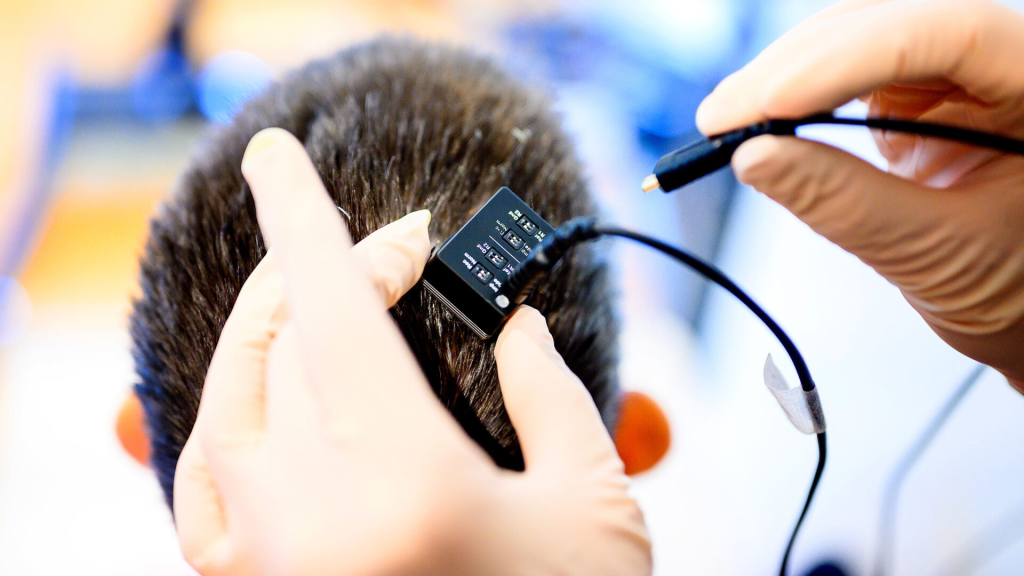
The research team showed that the same AI system can also work with non-invasive sensors, like facial muscle EMG (electromyography) systems. Facial muscle EMG systems work by placing sensors on the skin to detect tiny electrical signals from facial muscles when a person silently tries to speak, allowing the device to interpret and translate those muscle movements into speech without needing brain surgery. In the future, patients might have the option to choose between surgical brain implants or external sensors based on their needs and comfort levels. Regardless of the method, the aim remains the same: to help people communicate easily and naturally.
To put it simply (and in case we got a little too deep in the weeds) here’s the quick breakdown:
- The system detects brain signals when a person imagines talking.
- AI decodes those signals (even if the person can’t physically speak the words).
- A custom-built algorithm streams the speech almost instantly.
- Bonus: it can even recreate the person’s natural voice by referencing old recordings.
Why This Matters: A New Era of Connection
For people with severe paralysis (like those with ALS, brainstem strokes, or spinal cord injuries) losing the ability to speak can be devastating.
This brain-to-voice upgrade brings back:
- Fluent conversation without huge delays
- Emotional connection through personalized voice tones
- Self-agency by allowing real-time communication
One study participant even said that hearing her own voice again made her feel “embodied”, like she was fully herself again. And that’s not just powerful, it’s life-changing.
What’s Next for Brain-to-Voice Tech?
Researchers are already working on the next frontier:
- Building emotional expression into speech (tone, pitch, excitement)
- Making the devices smaller and less invasive
- Speeding up the AI decoding even more
- Expanding use for conditions like strokes, ALS, and brain injuries
The future? We hope a world where no one has to suffer in silence, and voices are restored!
Want to stay informed on the latest in healthcare? Subscribe to the UpNEXHeath blog and get notified when new articles are published!
FAQs –
How fast is the speech translation?
Less than one second, almost real time!
Does the speech sound robotic?
No! It actually sounds natural, and researchers can even recreate the person’s own voice from before their injury.
Who can benefit from this technology?
People with severe paralysis, brain injuries, or neurodegenerative diseases that affect speech.
Is surgery required for the brain implant?
Some versions use brain implants, but researchers are also developing non-invasive options that only use facial muscle sensors.
When will this be widely available?
It’s still in the research and clinical trial phase, but experts believe commercial devices could appear within the next 5–10 years.


 UPNEX HEALTH