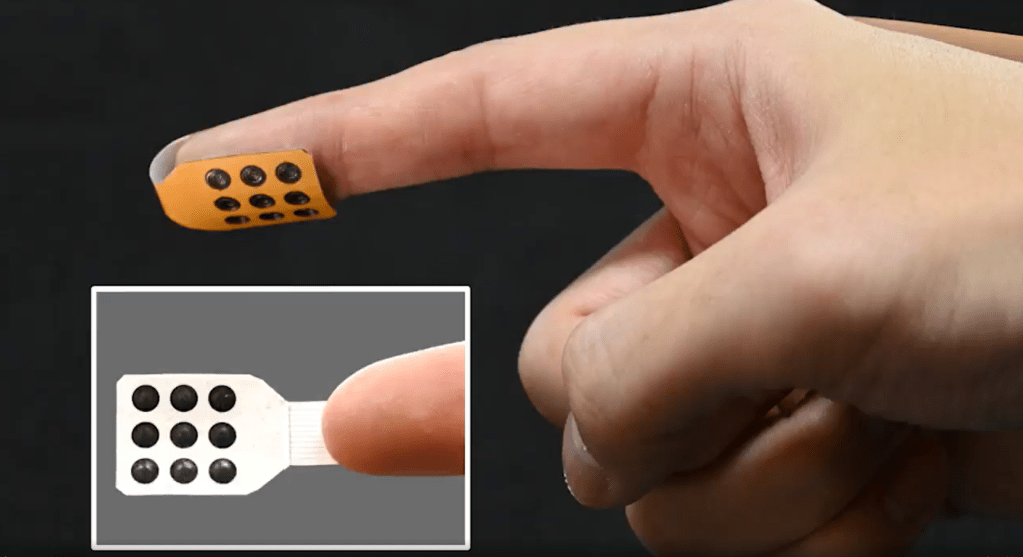
The Future of Touch Is Here Imagine reaching out in virtual reality and actually feeling the edges, textures, or vibrations of objects in your hand. We’re not talking science fiction anymore. Researchers have just developed a paper-thin, wearable patch that makes this possible, and it’s one of the most exciting advancements in immersive tech we’ve seen all year.
Published in Science Advances (March 2025), the study introduces a new kind of haptic interface: a skin-attached haptic patch. This flexible, wireless device delivers tactile feedback directly to your skin, creating a dynamic sense of touch in virtual or augmented reality (VR/AR) environments. It doesn’t just simulate touch. It lets you feel it.
Understanding the New Skin Patch for Immersive Virtual Reality Sensations
The patch contains ultra-thin materials called flat-cone dielectric elastomer actuators (FCDEAs) that move in response to electrical signals. When these actuators move, they push on your skin, recreating sensations like pressure or vibration. The patch also includes sensors that read what your skin feels and send that info back, creating two-way communication.
In short, it’s like a touchscreen for your skin….but way smarter.
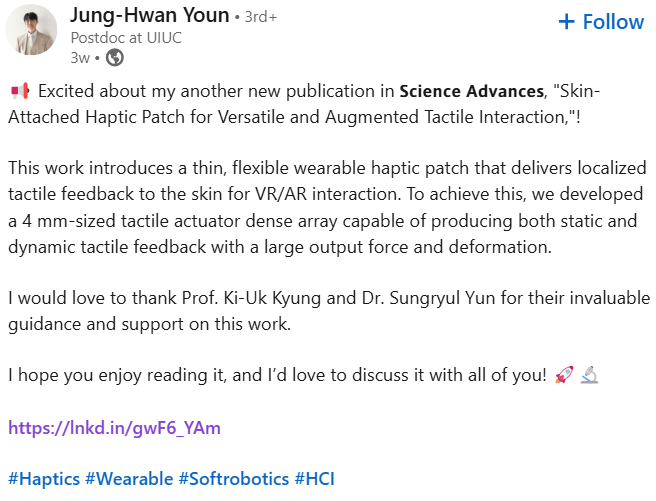
Each actuator is super lightweight and tiny (about 6 mm wide), but powerful enough to simulate everything from a soft press to rapid vibration. They’re arranged in a tight grid so they can recreate detailed shapes, letters, or textures.
Unique Features of This Technology
We’ve seen gloves and suits that try to bring touch into VR, but most are bulky and require external power sources or air compressors. This patch is:
- Thin and flexible (just 1.1 mm thick)
- Wireless and wearable
- Capable of fast, accurate touch sensations across a wide frequency range (0.1 Hz to 500 Hz)
- Safe, with low power use and insulated components
User tests showed participants could recognize dynamic patterns and even textures with over 97% accuracy. Yes, it’s that precise.
Exploring Other Breakthroughs
Alongside the skin-attached haptic patch, other researchers are creating unique technologies. A notable example is Alex Mazursky’s MagnetIO, a magnetic haptic device that provides detailed touch sensations using controlled magnetic forces. Its ability to offer quick feedback and smooth responses may make it very useful for tasks like manipulating virtual objects or performing precise remote actions in digital environments.
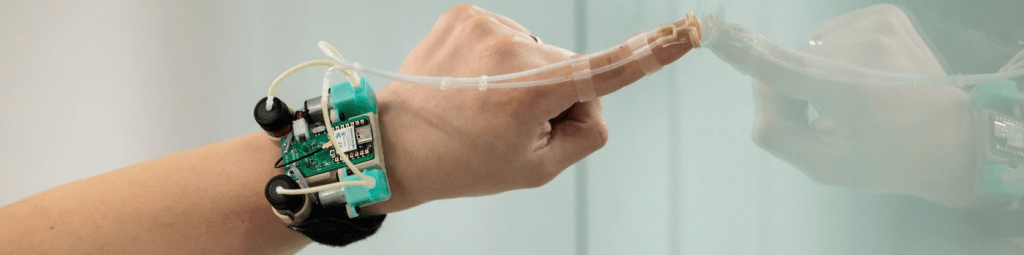
Another exciting development comes from Kyoung-Ho Ha‘s electromagnetic haptic actuator. This device uses electromagnetic forces to create various touch sensations that can be felt in specific areas of the body. It offers a greater range of realistic touch experiences.

Each of these innovations (using magnetic, electromagnetic, or dielectric elastomer methods) shows the different ways being explored to connect digital and physical experiences.
Can these patches be used in healthcare?: The Power of Touch in Healing
Right now, researchers are using it for VR environments to enhance user immersion. Think gaming, virtual social interaction, or remote collaboration where you can actually feel a handshake. But let’s talk about what we see coming next.
At UpNEX Health, we believe this breakthrough goes far beyond entertainment.
Here’s how we envision this tech revolutionizing healthcare:
- Virtual Reality Rehab: For stroke survivors, amputees, or patients recovering from spinal injuries, VR-based rehab is already gaining traction. This patch could supercharge it. By adding real touch feedback to digital rehab environments, patients can retrain their brains and bodies in more natural, engaging ways.
- Sensory Re-Training: For individuals with sensory processing difficulties or nerve issues, tactile training tools are very important. Picture being able to customize vibration patterns to assist users in re-learning how to feel touch. This patch provides the accuracy and adaptability needed to make that happen.
- Mental Health & Mindfulness: Imagine guided meditation apps that don’t just talk you through breathing but gently pulse on your skin in sync with your breath. Tactile feedback can add a whole new dimension to mental health support.
We’re keeping a close eye on this technology not just for its wow factor, but for its potential to create accessible, low-profile, wearable solutions for healing and therapy.
Want to stay informed on the latest in healthcare? Subscribe to the UpNEXHeath blog and get notified when new articles are published!
FAQs –
What is a skin-attached haptic patch and how does it work?
A skin-attached haptic patch is a thin and flexible device you can wear that creates real feelings, like vibration or pressure, on your skin. It uses special components called flat-cone dielectric elastomer actuators (FCDEAs) that react to electrical signals, helping you feel touch in virtual and augmented reality experiences.
When will haptic skin patches be available to the public?
This wearable haptic technology is still in the research phase, but given its current progress, consumer versions may become available within the next 3–5 years. Industry adoption in health, gaming, and VR therapy could happen even sooner.
Is the skin haptic patch safe to wear for long periods?
Yes. Despite using high voltage for actuation, the device operates with extremely low electrical current and includes multiple safety features like insulation layers and current limits. It’s designed for safe, skin-level interaction.
Can this technology be used outside of virtual reality?
Absolutely. Beyond gaming and VR, skin-attached haptic patches can enhance physical therapy, sensory re-training, mindfulness apps, and even remote communication through tactile feedback. It’s a versatile platform with wide potential.
How does this compare to traditional haptic gloves or suits?
Unlike bulky haptic gloves or vests that require external hardware, this patch is ultra-thin, wireless, and comfortable enough to wear on different body parts, like the hand, forearm, or palm, making it far more practical for everyday use.
Can wearable haptics replace physical therapy sessions?
While not a full replacement, this tech can significantly complement physical therapy, especially for remote rehab. It can guide users through exercises and deliver tactile cues that help retrain motor or sensory functions in a controlled, repeatable way.


 UPNEX HEALTH