
In today’s rapidly evolving healthcare landscape, real-time monitoring of vital health biomarkers is becoming an essential component of proactive medical care, especially for those at risk of chronic cardiovascular conditions. By tracking vital signs such as heart rate, blood pressure, and other critical indicators instantaneously, healthcare providers can intervene early and customize treatment plans effectively.
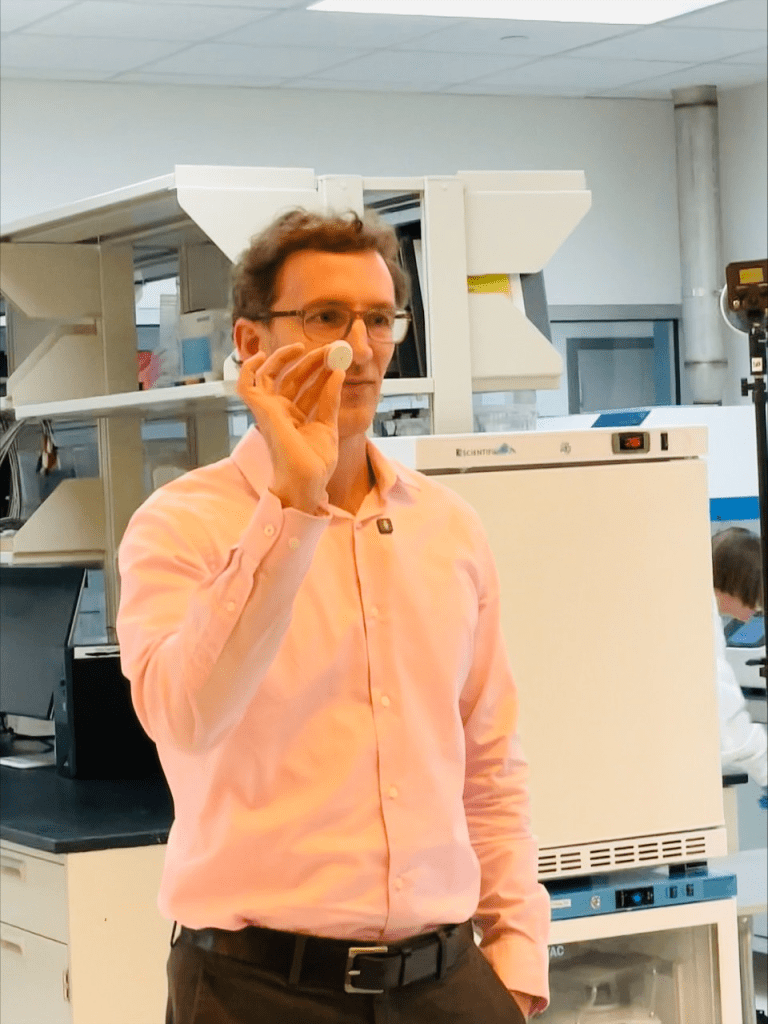
At the University of Cincinnati, biomedical engineering expert Professor Jason Heikenfeld is redefining the future of wearable health technology by developing innovative devices that not only monitor these biomarkers but also provide actionable insights. His groundbreaking research aims to integrate advanced sensors into everyday wearables, empowering individuals to take charge of their health and wellbeing, ultimately leading to better health outcomes and a reduction in healthcare costs associated with chronic disease management.
A New Era in Health Monitoring
Traditional wearables, such as Fitbits and smartwatches, excel at tracking physical activity and heart rate but fall short when it comes to monitoring the subtle molecular changes that precede serious health issues. Professor Heikenfeld’s innovative approach repurposes technology originally designed for glucose monitoring to create a compact, nearly Band-Aid–sized device.
This wearable is engineered to continuously sample tiny amounts of sweat, providing real-time data on a variety of critical biomarkers—from stress hormones like cortisol to indicators of cardiac function such as NT-proBNP (a hormone released by the heart in response to stress or strain). This breakthrough paves the way for early detection of cardiovascular events and could significantly transform how chronic diseases are managed.
The Science Behind the Innovation
At the heart of this technology lies an advanced sensor system that overcomes the limitations of earlier sweat-based monitoring methods. Initial attempts at utilizing sweat analysis were challenged by the fragile nature of DNA-based sensors, which often degraded within hours. However, through years of dedicated research and strategic pivoting, Heikenfeld’s team has succeeded in extending sensor longevity from mere hours to several weeks. This significant improvement not only enhances the reliability of the data but also makes continuous, non-invasive monitoring a practical reality for everyday use.
From Concept to Commercialization
The journey from laboratory innovation to a market-ready product has been anything but linear. After an initial foray into wearable molecular monitoring that faced setbacks due to technical and market challenges, Heikenfeld reimagined his approach. In 2021, he launched a new startup—Kilele Health—in collaboration with seasoned entrepreneur Andrew Cothrel.
By leveraging existing continuous glucose monitor technology, their pragmatic strategy focused on expanding the range of detectable biomolecules. With early multiweek trials already underway and over $3 million in external funding, Kilele Health is poised to bring this revolutionary device to market by 2027.
Impact on Cardiovascular Health
Cardiovascular disease remains a leading cause of emergency room visits and healthcare expenditures. For instance, chest pain alone drives more than 6.5 million ER visits annually in the U.S. By providing continuous monitoring of heart-related biomarkers, the new wearable device has the potential to alert patients to critical changes well before a full-blown cardiac event occurs. This early-warning system could empower individuals to seek timely medical intervention, ultimately saving lives and reducing healthcare costs.
Looking Ahead
As our population ages, the demand for proactive health monitoring will only increase. Innovations like Professor Heikenfeld’s wearable device not only offer hope for better management of chronic illnesses but also highlight the transformative power of integrating advanced engineering with healthcare.
Want to stay informed on the latest in healthcare? Subscribe to the UpNEXHeath blog and get notified when new articles are published!
FAQs –
What is the wearable device all about?
The device is a next-generation wearable monitor that continuously tracks a range of vital biomarkers, such as stress hormones and cardiac function indicators, using tiny sweat samples. Its aim is to detect early signs of chronic diseases, particularly cardiovascular conditions.
How does the technology work?
By repurposing and enhancing existing glucose monitoring technology, the device uses advanced sensors to analyze molecular data from sweat. Recent innovations have improved sensor longevity, allowing for continuous, reliable readings over several weeks.
Who is behind this breakthrough?
The innovation is led by Professor Jason Heikenfeld from the University of Cincinnati, in collaboration with his startup Kilele Health and CEO Andrew Cothrel. Their combined expertise in biomedical engineering and molecular diagnostics is driving this transformative project.
When will this device be available to consumers?
The current target for commercialization is around 2027, following extensive multiweek trials and ongoing refinements to ensure accuracy and reliability.
How might this device change healthcare?
By providing early warnings of cardiac stress or other biomolecular imbalances, the device could significantly reduce emergency room visits and improve overall patient outcomes through timely interventions.


 UPNEX HEALTH