In honor of Black History Month, we spotlight the incredible work of Dasia Taylor, a young inventor whose groundbreaking innovation in infection-detecting sutures is transforming post-surgical care and addressing critical healthcare disparities. Taylor’s journey from a curious high school student to the founder and CEO of VariegateHealth is not only a testament to youthful ingenuity but also a powerful reminder of the importance of diversity and representation in STEM.
From Science Fair to CEO: Dasia Taylor’s Journey of Innovation
Dasia Taylor’s story began in a high school classroom in Iowa City, where a simple science fair project evolved into a revolutionary medical invention. Inspired by the challenges faced by underserved communities—and particularly by the disparities in post-surgical care experienced by Black patients—Taylor set out to develop a cost-effective, low-tech solution for early infection detection. Through relentless experimentation, she discovered that beet-derived dye, when applied to a cotton-polyester suture, could serve as a natural pH indicator. As the pH of an infected wound rises from its normal acidic state, the suture transitions from bright red to a deep purple, alerting healthcare providers to the onset of infection.
“I found that beets changed color at the perfect pH point,” Taylor explained. This simple yet ingenious solution not only bypasses the high costs of conventional electronic “smart” sutures but also enhances early detection, which is especially crucial for patients in low- and middle-income countries.
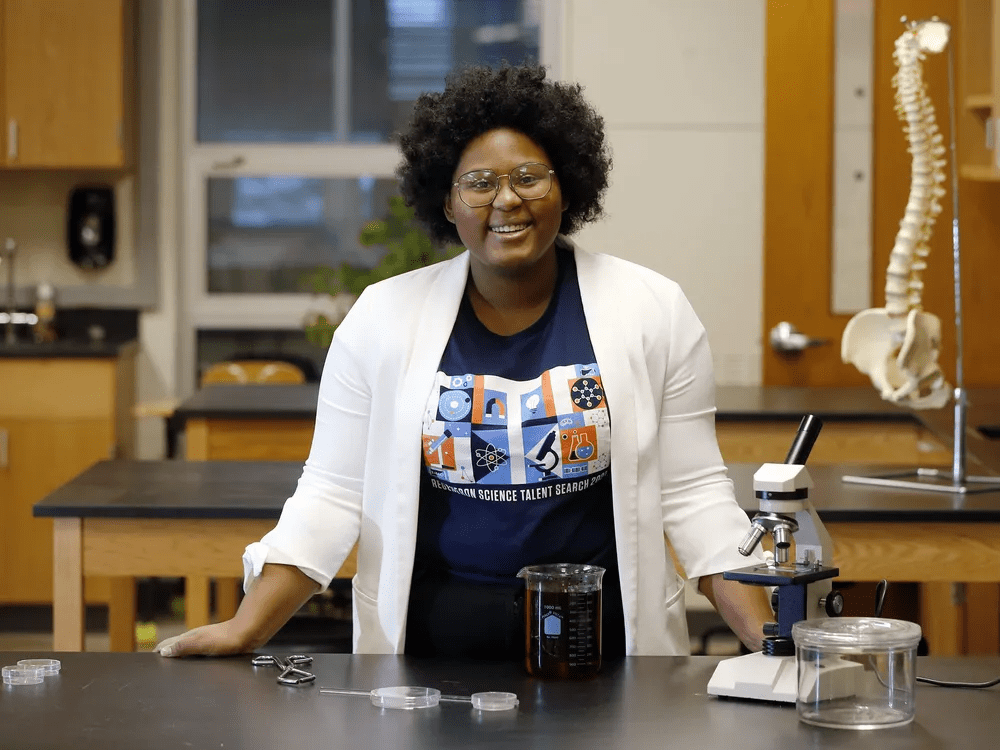
Image Credits: Courtesy of Society for Science
How Dasia Taylor’s Sutures Work: The Science of Early Infection Detection
At its core, Taylor’s innovation leverages basic principles of chemistry. Healthy human skin has a pH of around 5, but when a wound becomes infected, the pH can soar to 9.
Rather than relying on expensive electronics to monitor these changes, Taylor’s sutures use a natural dye from beet juice that visibly alters its color in response to these pH shifts. This rapid, visual cue, emerging in as little as five minutes, provides an immediate, low-cost method for early infection detection.
Such an approach is not only innovative but also offers significant advantages in resource-limited settings, where advanced medical technologies might be out of reach. By using natural, affordable materials, the sutures promise to bridge a critical gap in global healthcare accessibility.
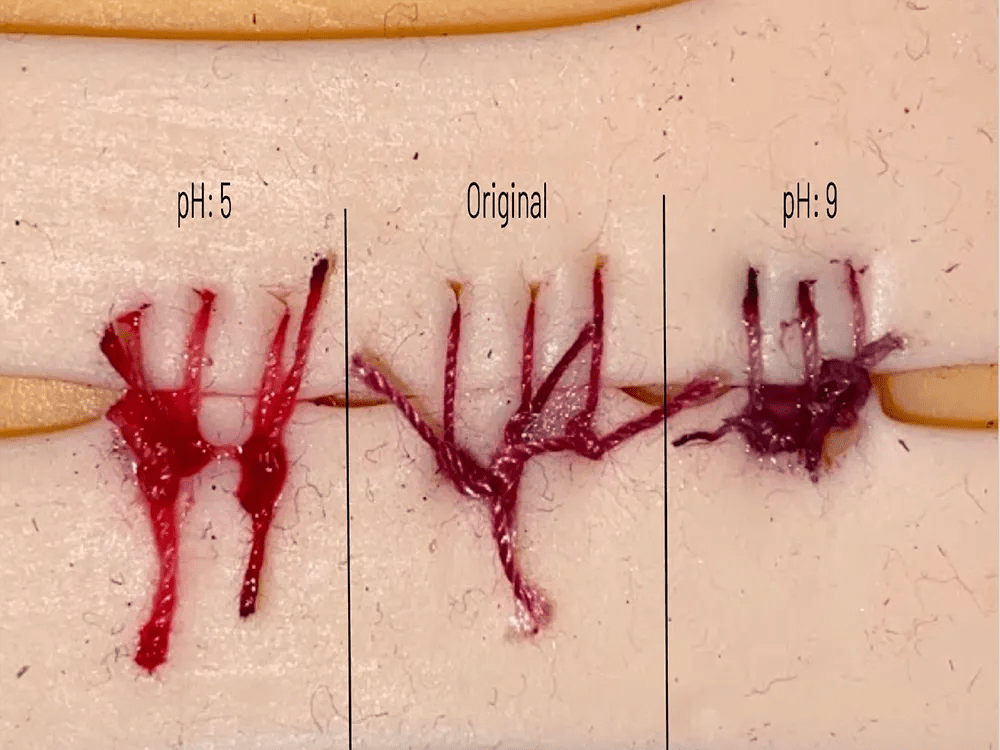
After exposure to an infection-like pH, the cotton-polyester thread changes from bright red to dark purple. Image Credits: Courtesy of Society for Science
Impact on Healthcare and Racial Equity
One of the driving forces behind Taylor’s invention is her commitment to equity. Traditional signs of infection (such as redness and swelling) can be less visible on darker skin tones, delaying diagnosis and treatment for many Black patients. Taylor’s color-changing sutures, therefore, offer a vital tool in reducing these disparities, ensuring that early signs of infection are not overlooked.
Moreover, by developing a technology that is both cost-effective and accessible, Taylor is paving the way for broader adoption in communities where financial and technological barriers have historically limited access to advanced medical care. This commitment to inclusion and equity in healthcare is a powerful message during Black History Month, underscoring the importance of diverse voices and solutions in medicine.
Inspiring the Next Generation
Today, Dasia Taylor continues to innovate as the founder and CEO of VariegateHealth. Her journey, from a high school science fair to national recognition as a finalist in the Regeneron Science Talent Search and even being honored as one of USA TODAY’s Women of the Year, demonstrates that age and background are no barriers to meaningful change.
She recently shared on LinkedIn that she teamed up with Andrew Snyder to film the first module of the NERD STEM Box, a hands-on kit designed to spark curiosity and make STEM both fun and accessible for all.
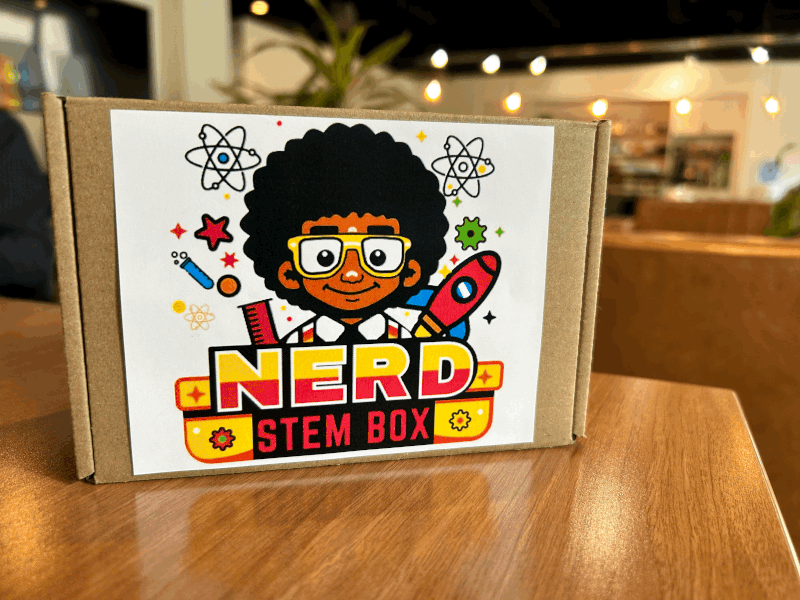
Image Credits: Linkedin Post
On March 10, 2025, from 9:00 AM to 1:30 PM at the Parma-Snow Library, she will also co-facilitate the “Celebrate Youth Entrepreneurship” event—an exciting, hands-on STEM and entrepreneurship field trip for students in grades 6–12, where participants will pitch ideas, design new products, and compete for top prizes.
Taylor’s work inspires not only her peers but also a new generation of innovators, particularly from communities that have been historically underrepresented in STEM fields. Her story is a beacon of hope and a reminder that transformative ideas can come from the most unexpected places. It challenges us to invest in young talent and diverse perspectives, paving the way for a healthier, more equitable future.
Want to stay informed on the latest in healthcare? Subscribe to the UpNEXHeath blog and get notified when new articles are published!
FAQs –
Who is Dasia Taylor?
Dasia Taylor is a young inventor and entrepreneur known for developing infection-detecting sutures that change color when a wound becomes infected. She began her journey in high school and now leads VariegateHealth, a company focused on innovative, equitable medical devices.
How do the infection-detecting sutures work?
The sutures are coated with a dye derived from beet juice, which serves as a natural pH indicator. Under healthy conditions, the suture remains bright red; however, when the wound’s pH increases due to infection, the color shifts to deep purple, alerting caregivers to potential complications.
How do Infection-Detecting Sutures differ from traditional sutures?
Unlike traditional sutures, Infection-Detecting Sutures use a natural dye that changes color in response to pH changes, providing an immediate and low-cost method for early infection detection.
How could these sutures impact global healthcare?
Their low cost and simplicity make them particularly beneficial for low- and middle-income countries, where access to advanced medical technology is limited. By enabling early detection of infections, these sutures have the potential to reduce complications and lower healthcare costs worldwide.
What’s next for Dasia Taylor and VariegateHealth?
Taylor is in the process of patenting her innovative sutures and continues to refine her technology. As she builds her company, she also focuses on educational outreach and equity in healthcare—ensuring young innovators can see themselves in STEM fields. Recently, she teamed up with Andrew Snyder to film the first module of the NERD STEM Box, a hands-on kit designed to make STEM fun and accessible for students of all backgrounds. By integrating real-world problem-solving and interactive learning, Taylor’s goal is to foster creativity, spark curiosity, and ultimately inspire the next generation of STEM leaders in their communities.
How can I get involved in innovative healthcare projects like Infection-Detecting Sutures?
You can get involved in innovative healthcare projects by staying updated on the latest healthcare research and innovations, attending healthcare conferences and events, and networking with healthcare professionals.


 UPNEX HEALTH